Although we only have two characters in our film opening, the stereotypes and representations of gender are clearly displayed in our victim and villain.
The stereotypes of males are that they are strong, dominant, in control, more violent and have power over women. The stereotypes of females are that they are weaker, more vulnerable, more emotional and can be under the control of a man.
Our two characters conform to these stereotypes as the villain is expressing his power over the victim and feels like he has the right to end her life as punishment for being a prostitute and becoming pregnant.
In horror films, the villain is often a male as they are seen as more threatening, more scary and therefore more likely to be capable of harming people without feeling guilty. The victims will generally be females as they are more innocent and vulnerable and will be easier to 'be murdered' by a man.
The fact that our victim is a female also ties in with what people first think about prostitutes as she is wearing revealing clothing and is hanging around in a dodgy area, if we chose a male to be the victim it wouldn't be as obvious and might confuse our audience which isn't really our aim.
People look down on prostitution and dismiss those who work in the field and in the media they are mostly portrayed in a negative light and that they like what they do, which is true for some cases but we wanted to show the other side, how some are forced into it and don't have a choice, making the audience feel sympathetic for them, which they wouldn't usually do.

Anastasia Kemp: 8108 Hayley Louise Tibbs: 8394 Raman Gill: 8072
Showing posts with label Victim. Show all posts
Showing posts with label Victim. Show all posts
Wednesday, 9 April 2014

Friday, 27 December 2013
Actor Scouting:
Villain:
For our villain we knew the type of guy we wanted but it was quite difficult to find anyone who would be willing to participate with our filming.
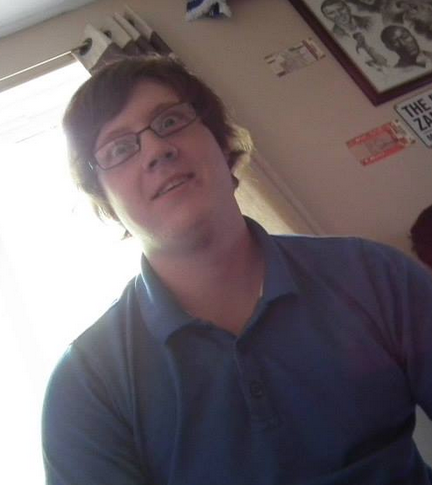
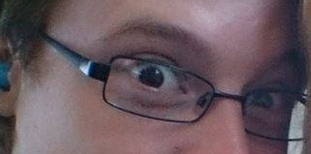
Jordan (20)
He is around the appropriate age for our villain, and although he isn't that tall we can easily change the camera angles to make him appear taller. The main feature that is ideal for our villain are his eyes, he wears either glasses or contact lenses and they look creepy at times, which would be good if we decided to have an extreme close up shot of his eyes.

Victim:
For our victim, we want someone who looks particularly feminine and yet innocent and vulnerable. They also need to be available to film and if they are around our age, they could be busy with school work etc. All of our main choices are in our school year, which is a similar age to our villain, but we decided to go with Catherine as she is slim and has long hair which is a perfect fit for our character.
Catherine (16)


Kayleigh (16)


Friday, 13 December 2013
Additional Ideas for Storyboard

Similar to Anne Frank's diary, we will have pictures of folklore foetuses and pregnant women, as mentioned in a previous post, to emphasise his obsessive nature to the audience.
Also, I think that we should have an extreme close up of some book titles (idea of books from Annie's post) - we have a book called Fear is Key, and we could get some books about pregnancy, post-natal depression, operations, sedatives, women's health and so on. This close up will give the audience a greater insight into his obsession with women, so I feel that we should include this, even if it is for a split second.
From our trip to Shoreditch, Annie and I went into a vintage store and saw a basket with women's purses in it and this gave us the inspiration to, perhaps, have a basket with all his victim's clothes in. If we were to have this, the clothes, shoes, purses and so on would serve as souvenirs of his victims which, again, highlights his fascination and obsession. This can be shown using a close ups so the audience can see the items properly.

As well, in the middle of the room there is going to be a table so the victim is the centre of attention for the audience. The table is going to have plastic on it so the blood collects itself to make the death more gory and gruesome. From Annie's post, she included pictures of a victim on a cloth on a table, however we want to incorporate some of Dexter's room (in the same post) so we will use plastic instead of cloth.

My group decided that the killer is going to wear a mask to cover his face which will have Adore & Endure carved into his forehead. In the chase scene he will be wearing a mask, then in the operation scene he will be wearing a doctor's mask and scrubs to tell the audience that he is a professional, but crazed and does not operate to save people, he does it to kill them. This is similar to an episode of Hannibal where a mentally unstable doctor operated on someone, taking out their organs one by one to see the minimum number of organs the victim can survive without.

Friday, 29 November 2013
Deconstruction: Victims and Villains Clothing
Deconstruction of the outfits worn by the villains and victims:
ATM:
+ATM+Hooded+Killer+Screenshot+1.jpg)
~ The mysterious anonymous killer in ATM is never revealed, throughout the film he wears a winter coat with the hood up to hide his head. This is unusual as it seems like an ordinary item of clothing, not something a serial killer would wear, but the simple change of having the hood up and the use of lighting to darken out his face makes him appear so much more creepier and scary.

~ The victims of this particular attack are three colleagues who have come from work, this is why the men are wearing smart business clothes, but slightly different shades so they don't look identical. The woman is dressed in a smart yet casual coat, possibly over smart work clothes so we can assume they all have a 'high-paid' successful job and are just three ordinary people stopping at an ATM.
~ These outfits aren't typical of a victim from a slasher film but they are suitable to their individual characters, this gives me the idea that our costumes for our victim(s) should be linked to their personalities and attitudes, not just because they are the victim. What I found from researching victims is that their outfits are closely linked to either their jobs or personalities, so unless we go for a specific type of victim (which we might be) then our characters costume should be based around them.
A Nightmare on Elm Street:

~ Freddy Krueger's outfit in the A Nightmare on Elm Street franchise could have been considered ordinary (excluding his skin and hands) but has now become an iconic costume, related to the character and will also be connected with it. He is usually seen wearing a dark coloured trilby hat and a red and black stripy jumper with dark coloured trousers. If worn separately, they would look normal but when put together someone would instantly see the resemblence to Freddy Krueger.
~ Taking inspiration from outfits like these, I think it would be effective to have our character wear something slightly ordinary, but as it's them wearing it, they should make the items of clothing creepy and well-known to a killer. On the other hand, it can also be good to have something completely out of the ordinary but relatable to our villain.
~ Taking inspiration from outfits like these, I think it would be effective to have our character wear something slightly ordinary, but as it's them wearing it, they should make the items of clothing creepy and well-known to a killer. On the other hand, it can also be good to have something completely out of the ordinary but relatable to our villain.
Practical Investigation: Victim and Villains Clothing
Villain:
~ For our villain, I think it would be important to have a costume that either we already own, can be made easily or is relatively cheap. At the same time it has to be relevant to our character so the audience can understand that they are the villain. At the moment, our villain is an adult male, somewhere in his twenties or thirties and his main victims are young teenage girls, who become pregnant when underage. I liked the idea of our villain being simply dressed in something completely inappropriate, such as a pristine suit. This would be confusing as not many serial killers would wear a suit whilst murdering their victims.

~ We could even take it a step further and make him wear a tuxedo or a groom's wedding suit, maybe hinting that he was jilted or his wife died suddenly. If we did decide to do this however, we would possibly have to make sure that the reason for his inappropriate outfit was explained during the two minute opening as we wouldn't want to confuse the audience.


~ Similar to the ideas above, I also liked the idea of our villain wearing a police uniform. This would be juxtaposition as well with the idea of good vs bad, police vs criminals. Again, if we chose this option we would have to explain why he would be wearing it, maybe in the past he was a police officer but something happened so he had to change jobs or he saw something that changed him mentally.

~ We are currently thinking of including a scene in our opening where the villain cuts into the victim, almost like a cesarean and then we had the idea of dressing our villain in something related to a hospital, as that would be related to the character but creepy at the same time. If choosing this option, then we could also include a surgical mask that are normally worn by dentists although nurses wear them as well, this could have negative effects on our audience and maybe bring up bad memories.


Victim:
~ If we did decide to go with the underage pregnancy/prostitute obsession then as our villain's targets are so specific, they would all be wearing very similar clothing. Our victim would be wearing very revealing clothing, depending on the time of weather, but if we choose to set it in winter, then it would be more obvious to the audience that she was a prostitute as she wouldn't choose to go out in revealing clothing in the freezing cold weather. If we definitely go with the pregnant idea, then we would have to make sure the top would be loose enough for the victim to have a 'baby bump' but still cling to her body. I think our victim should almost definitely be wearing a short skirt, to exaggerate her femininity and her attempt to show off as much of her body as she can. Below are some of the outfits I could imagine some of our victims wearing, although it depends on how far into the pregnancy he takes them, but these photos give a general idea. Obviously the summer-y aspects would need to be changed, they might not be as colourful or pretty but in terms of size I think they are accurate.


Friday, 15 November 2013
Practical Investigation of Content in Killer's Diary


 I was trying to find some pictures of foetuses, especially ones from folklore such as devil or animal foetuses. Unfortunately, I was not able to find much however I came across sketchings from Leonardo Da Vinci of foetuses and pregnancy women.
 Looking at Da Vinci's work, it would be interesting if our killer was to draw pictures of pregnant women and their foetuses because this would emphasize his obsession and fascination with foetuses and pregnancies. The audience will see him as mysterious and obsessive but also memorable.
Here, I have taken pictures of what the killer's diary might look like with the pictures in and words circled in red pen - red = blood, danger, lust, and (ironically for this) love.


Overall, for our final project, we will make the killer's diary look messy with random words circled describing the killer, victims, and the murders. For the opening, these words can be focused on to show the audience of the killer's obsession; obsessive killer's being a slasher convention in order to frighten the audience more.
Deconstruction of Insects, Maggots & Invertebrates in Films
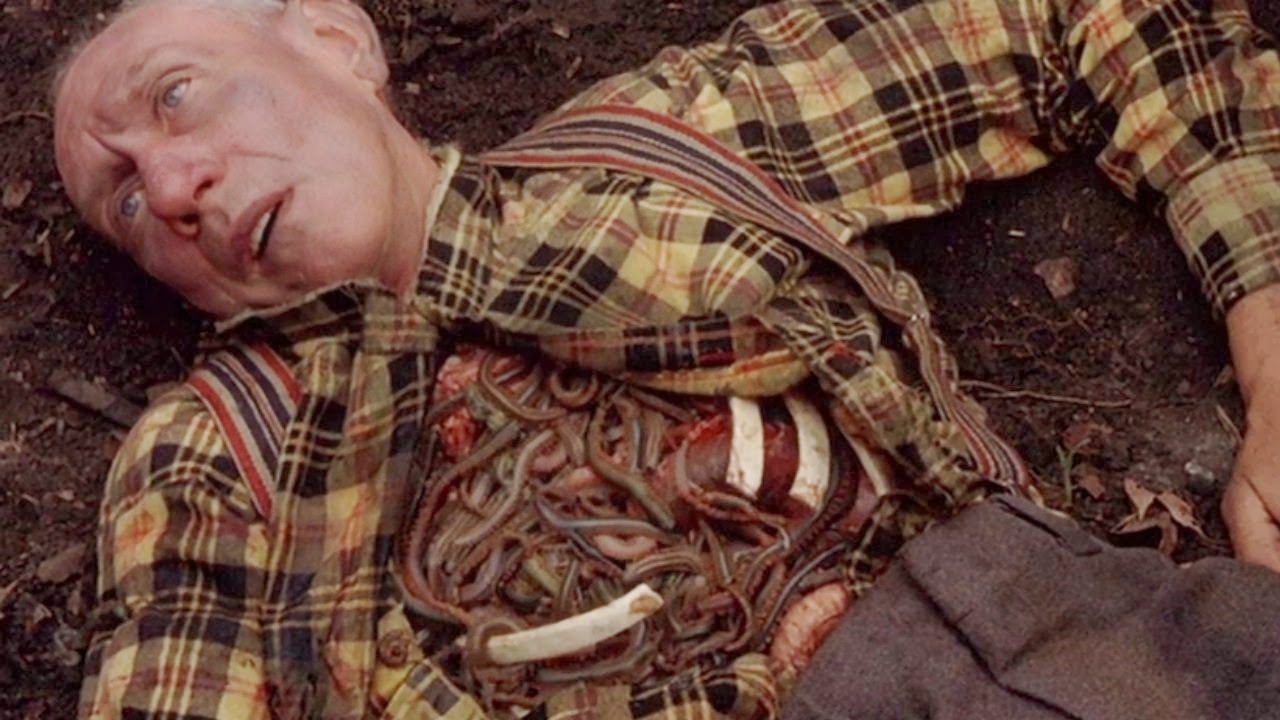


In Candyman, the 'Candyman' was killed by his girlfriend's father by being stung to death by bees. He comes back as an urban legend when his name is chanted 5 times. When he opens his mouth, bees come flying out, and opening his coat, his abdomen has been eaten away by the bees. For our final project we would not include a 'spirit' of a victim as that is more supernatural, however, the idea of bees (or other forms of insects, invertebrates etc) eating away at a victim would be good as decaying & gruesome bodies is a slasher convention.

Overall, for our final project, we could include maggots as they are the most squeamish of invertebrates and, as we are doing a slasher, we would want our audience to feel that way. Putting them in the dead victim's mouth, as in Don't Let Him In, Candyman, and Drag Me To Hell, is the most disgusting so we could do that, or we could put them on the victim’s skin. This would also frighten the audience because the maggots could burrow in the skin which could harm the victim (if alive).
Wednesday, 13 November 2013
Point of view- Victim/Killer Deconstruction
Really starting to think about the filming of our film opening, I decided to do a deconstruction on the points of view portrayed through camera angles and editing within different films.
First of all, I wanted to look at the way the camera portrays the point of view of the victim through angles, still making them look like a victim within the sequence. This is a favoured type of point of view to portray within a Horror/Slasher movie as it gives opportunity to create "jump" scares and red herrings, tension when it is unclear what is going to happen next and terrifying mystery when the audience is forced to go into darkness, not knowing what is within it. It also gives opportunity to add "clues" for the audience to decipher who killer is and why he wants to hurt his victims.

 To the left and right shown screen grabs of a few of the different victims within the film. The scenes that they are in show their points of view, and I wanted to see how they did this.

 The first thing that I noticed was that their faces are used as a visual aid in deciphering their emotions and thoughts at each time, having close up shots on this.
They generally have mid shots of the victims rather than showing their entire bodies, to emphasis the idea of "fight or flight" reaction and the fact that their self survival is all in their mental ability to get out of the "trap" that jigsaw has placed them under. The only exception to this is when the victim wakes up, from having been taken by jigsaw, and the situation that they have been put in is revealed to the audience so they know what is happening with establishing shots of the room and mechanism they have been put in.
 The majority of Scream 4 is in the victims point of view. Most of the death scenes are shown in the You Tube clip embedded.
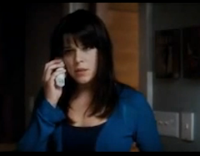 The different ways that I noticed that the camera represented the victim's point of view were firstly they had close up shots of their faces- just before the killer started to attack them. The face was illuminated with high key lighting in a generally low key lighted surroundings, so that the audience can see the victims emotions at that time.


 Throughout the "chase" of the victim by the killer, the camera always followed the victim running firstly, and then as the victim hid somewhere, it would stay with the killer, to show the audience what is happening, opposed to only letting them know as much as the victim would know in that circumstance.
 Camera angles also changed when in the victims point of view, with high angle shots, making the victim look more venerable, reflecting their terror in the image shown on screen.
Finally the lighting was another interesting feature within the death scenes. The victims were always much more illuminated than the killer, and, as seen in the last three screen shot above, when the victim is on screen, and hurt, the killer is always in the shadows, in the background, symbolising the fact that the victims are no longer concerned with the killer hurting them, as they already have been hurt, they are simply thinking about themselves- this is what the audience would be thinking also because of the positioning and lighting reflecting this view on screen.
Having looked at the victims point of view- an aspect that we may wish to use within our film opening-, I am now going to look at the point of view of the killer. This is POV not widely used, as it takes the element of terror at not knowing who the killer is, or what his/her story behind the killing is. It reveals the killer to be what he/she is, letting the audience see them completely, making it harder to scare them with "jump" shots. This also brings psychological components, making the audience think into the mind of the killer.

 Features within this TV series that make it a good "killer's point of view" include the continual close up shots of the killer's face, showing his emotions and relaying his thoughts through his facial features.
A voice narrative symbolising the killers thoughts is also used to allow the audience to get a better idea of what the killer is thinking, used mostly when he is stalking his victims or when he is worried about getting caught.
 The killer's father- Harry- appears when he is struggling with something or making a decision that could effect his future. His father, being dead, is just a ghostlike portrayal of the killers mind and conscience, reasoning with him to make him make decision such as would not get him caught killing people. The fact that this "conscience" appears to the killer as his father symbolises "daddy issues" that are present also.


 Close ups of the killer's eyes are used to show his emotions during his kills.
The camera also follows the killer, and the audience are exposed to scenes and scenarios that they wouldn't see if it was in the point of view of the victims.
 Following the killer, it allows the audience to get an idea of what his "ritual" of killing is and why he does it. You get to see his ability to kill, his planning, his technique and understand it, rather than are afraid of it.


 Low key lighting is used to make the killer look as if he is in the shadows again, like in the scream deconstruction of the victims POV, but the shadows represent something different- his ability to get away with what he is doing and still be able to have a normal family and life.
The killer is always the subject of the scene. It is focused on him when he is in the shot. This lets the audience see inside of the killer's mind linking to the physiological aspect of looking at the killer's POV within a film.
First of all, I wanted to look at the way the camera portrays the point of view of the victim through angles, still making them look like a victim within the sequence. This is a favoured type of point of view to portray within a Horror/Slasher movie as it gives opportunity to create "jump" scares and red herrings, tension when it is unclear what is going to happen next and terrifying mystery when the audience is forced to go into darkness, not knowing what is within it. It also gives opportunity to add "clues" for the audience to decipher who killer is and why he wants to hurt his victims.
Saw 3D
I looked at Saw 3D first, a well known, successful slasher film, to see how the many victims within it are shown with camera angles, and how their points of view are portrayed on screen.
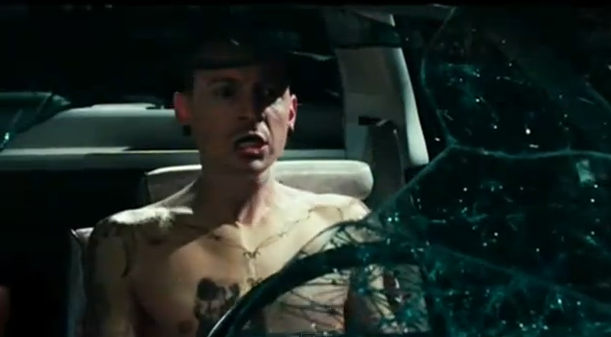 To the left and right shown screen grabs of a few of the different victims within the film. The scenes that they are in show their points of view, and I wanted to see how they did this.
 The first thing that I noticed was that their faces are used as a visual aid in deciphering their emotions and thoughts at each time, having close up shots on this.
 They generally have mid shots of the victims rather than showing their entire bodies, to emphasis the idea of "fight or flight" reaction and the fact that their self survival is all in their mental ability to get out of the "trap" that jigsaw has placed them under. The only exception to this is when the victim wakes up, from having been taken by jigsaw, and the situation that they have been put in is revealed to the audience so they know what is happening with establishing shots of the room and mechanism they have been put in.
Scream 4
 The majority of Scream 4 is in the victims point of view. Most of the death scenes are shown in the You Tube clip embedded.
 The different ways that I noticed that the camera represented the victim's point of view were firstly they had close up shots of their faces- just before the killer started to attack them. The face was illuminated with high key lighting in a generally low key lighted surroundings, so that the audience can see the victims emotions at that time.

 Throughout the "chase" of the victim by the killer, the camera always followed the victim running firstly, and then as the victim hid somewhere, it would stay with the killer, to show the audience what is happening, opposed to only letting them know as much as the victim would know in that circumstance.
 Camera angles also changed when in the victims point of view, with high angle shots, making the victim look more venerable, reflecting their terror in the image shown on screen.
Finally the lighting was another interesting feature within the death scenes. The victims were always much more illuminated than the killer, and, as seen in the last three screen shot above, when the victim is on screen, and hurt, the killer is always in the shadows, in the background, symbolising the fact that the victims are no longer concerned with the killer hurting them, as they already have been hurt, they are simply thinking about themselves- this is what the audience would be thinking also because of the positioning and lighting reflecting this view on screen.
Having looked at the victims point of view- an aspect that we may wish to use within our film opening-, I am now going to look at the point of view of the killer. This is POV not widely used, as it takes the element of terror at not knowing who the killer is, or what his/her story behind the killing is. It reveals the killer to be what he/she is, letting the audience see them completely, making it harder to scare them with "jump" shots. This also brings psychological components, making the audience think into the mind of the killer.
 |
| Killer and his "Father" conscience |

Dexter
The first thing that I thought of when the idea of the killers point of view came up, was "Dexter". This, though a television series, is in the point of view of a serial killer named Dexter. From the very beginning, the series starts with it being in his point of view, and until it ended, the series was very popular, especially in America.Features within this TV series that make it a good "killer's point of view" include the continual close up shots of the killer's face, showing his emotions and relaying his thoughts through his facial features. A voice narrative symbolising the killers thoughts is also used to allow the audience to get a better idea of what the killer is thinking, used mostly when he is stalking his victims or when he is worried about getting caught.
 The killer's father- Harry- appears when he is struggling with something or making a decision that could effect his future. His father, being dead, is just a ghostlike portrayal of the killers mind and conscience, reasoning with him to make him make decision such as would not get him caught killing people. The fact that this "conscience" appears to the killer as his father symbolises "daddy issues" that are present also.
The Fall
The fall is another really good TV series that shows the killer's point of view. A few of the different techniques that represent the killer's POV are shown below:

 Close ups of the killer's eyes are used to show his emotions during his kills.
 The camera also follows the killer, and the audience are exposed to scenes and scenarios that they wouldn't see if it was in the point of view of the victims.
 Following the killer, it allows the audience to get an idea of what his "ritual" of killing is and why he does it. You get to see his ability to kill, his planning, his technique and understand it, rather than are afraid of it.

 Low key lighting is used to make the killer look as if he is in the shadows again, like in the scream deconstruction of the victims POV, but the shadows represent something different- his ability to get away with what he is doing and still be able to have a normal family and life.
The killer is always the subject of the scene. It is focused on him when he is in the shot. This lets the audience see inside of the killer's mind linking to the physiological aspect of looking at the killer's POV within a film.
Subscribe to:
Posts (Atom)